How to Start Working Out Again After 40 (When It's Been Years)
It's been years since you trained. Here's the 16-week comeback plan an Allison Park trainer actually uses — the 7 movements to relearn first, and why.
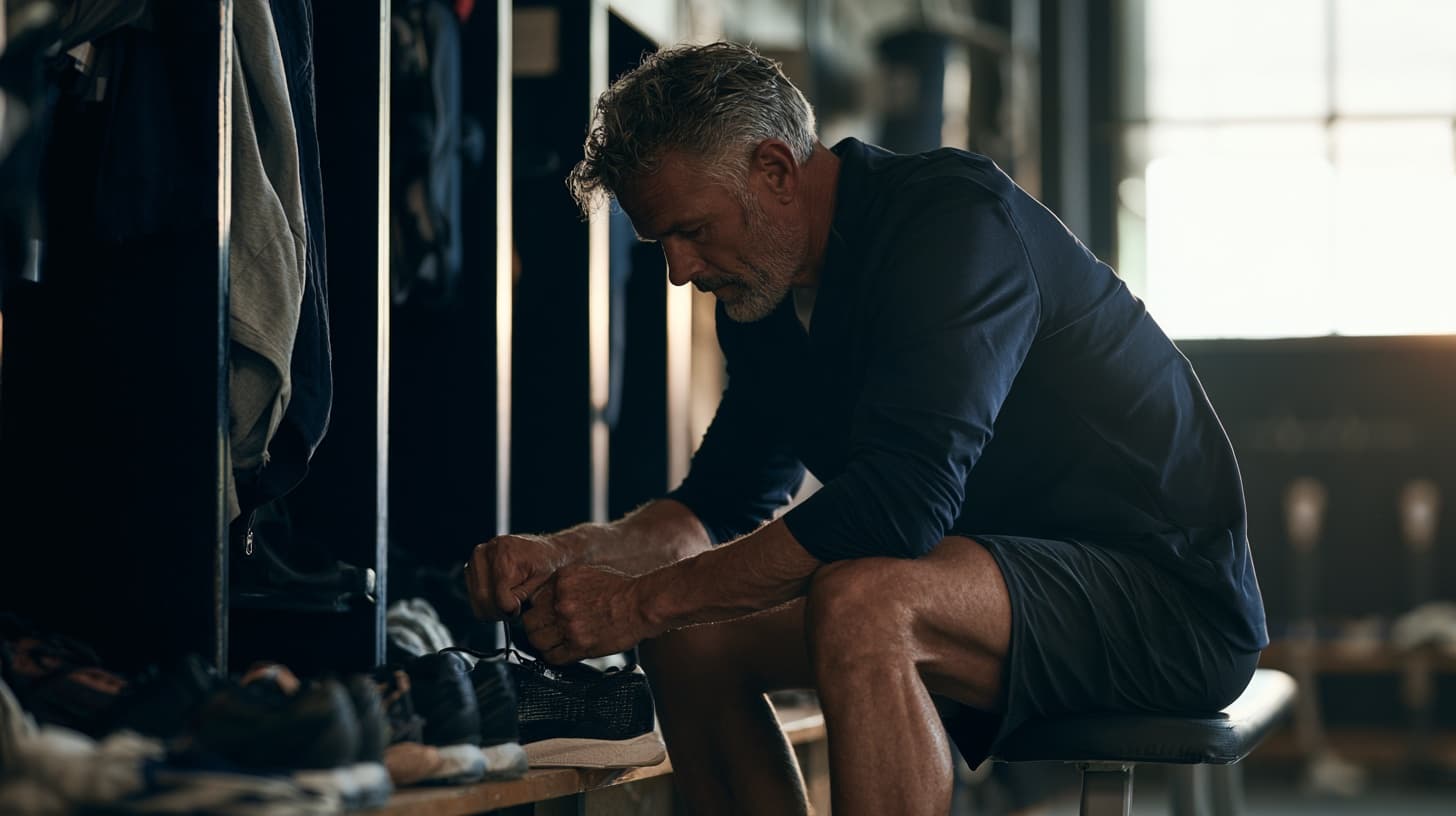
Each day, most of us live our lives prioritizing other people's needs and happiness while pushing our own well-being to the back burner. It's time to change that.
So let's talk about the thing a lot of people in their 40s and 50s are quietly avoiding: getting started again after years away from the gym.
The easy answer is: just do something. If you are doing nothing and you start doing anything, boom — improvement. That's real, and it's worth saying out loud.
The more sophisticated answer is to have a plan.
Don't Waste Four Weeks Warming Up to the Warm-Up
Building a routine and a habit is always a great start. I could tell you to go on a walk twice a week for an hour, for four weeks, just to get two hours of exercise a week into your calendar.
And that would work — as a habit exercise. But you'd be spending a month getting ready to do the thing that actually matters, which is getting strong.
Keep walking. Walk more, if anything. Just don't treat it as a prerequisite for picking up a weight. (If you're weighing walking against running for weight loss, I compared them in walking vs running for weight loss.)
After 40, Strength Is the Whole Ballgame
After 40 — or at any point in life, really — strength is key. It's what keeps your confidence, your mobility, and your independence intact.
For women over 40 specifically, it also protects bone density and muscle mass, which helps regulate hormones and fight off osteoporosis. A 2023 meta-analysis in Osteoporosis International found exercise produced favorable effects on bone mineral density at the lumbar spine, femoral neck, and total hip in postmenopausal women. If that's your situation, I went deeper on it in strength training for women over 40.
But this isn't a women's issue or a men's issue. Everyone gets weaker with age unless something is pushing back. Lifting is the thing that pushes back.
The First Month, You're Not There to Work Out
Here's the part most people get wrong.
At first, you should not go to the gym expecting a good workout. You should go with the expectation to learn.
Ideally you start working with a professional who knows how to teach you how to move your body correctly again. Over the first few weeks and months, you start with low load and basic movement patterns to build movement efficiency and work capacity. As you start to learn what your body feels like again, you increase the weights and the volume.
This isn't me being precious about form. It's how the adaptation actually works. Research on neural adaptations to resistance training published in the European Journal of Applied Physiology notes that increases in force production in the first two to four weeks are thought to be primarily underpinned by neural adaptations — your nervous system getting better at the movement — rather than new muscle tissue.
Translation: month one is your body remembering how to move. That's the assignment. Trying to turn it into a punishing workout doesn't speed anything up.
The 7 Movement Patterns You Need to Relearn
When you're starting a new exercise program, there are foundational movement patterns you need to be relearning and training. There are seven of them.
| Pattern | In the gym | In real life |
|---|---|---|
| Squat | Goblet squat, box squat | Getting off the couch or the toilet |
| Hinge | Deadlift, hip hinge, kettlebell swing | Picking up a laundry basket or a grandkid |
| Lunge | Split squat, step-up, reverse lunge | Stairs, curbs, getting up off the floor |
| Push | Push-up, overhead press, bench press | Shoving a stuck door, putting a bag in the overhead bin |
| Pull | Row, pulldown, chin-up | Starting a mower, pulling open a heavy door |
| Carry | Farmer carry, suitcase carry | Groceries from the car in one trip |
| Rotation | Cable chop, anti-rotation press | Turning to check your blind spot, swinging a golf club |
These movements are what take us through daily life. Without being able to do them properly, we end up with sore backs, sore knees, and sore shoulders — and then we blame it on being 45.
7
movement patterns that carry you through daily life: squat, hinge, lunge, push, pull, carry, rotation
Source: Cody Bock, M.S. Exercise Science, LMT — Full Circle Function & Fitness
If your lower back is already barking at you before you've started, that's worth reading about too — I covered lower back pain from sitting all day separately, because for a lot of people the desk is the real culprit.
The 16-Week Comeback Plan
Here's what the first four months should actually look like.
Notice what's not in there: a hard workout in week one. There's a reason for that. The soreness you're chasing on day one is the same soreness that makes people quit by day ten.
Find a Coach Who Works Around Your Pain, Not Through It
This is worth being specific about, because it's the single biggest difference between a comeback that sticks and one that ends in an injury.
You want someone who can work around your aches and pains — not through them. A good coach can take an exercise that normally hurts and make it not hurt, usually by changing the setup, the range of motion, the load, or the tempo. That's the job.
"Push through it" is not coaching. It's just volume with extra steps.
If you're weighing your options for where to do this, I broke down private vs semi-private vs group training and what a personal trainer actually costs in Pittsburgh in detail. The short version: for a true restart with aches and pains involved, private or semi-private is usually the right call for the first stretch, and plenty of people move into group once things are corrected.
This is the #1 type of client we work with at Full Circle — people in their 40s and 50s who haven't trained in years and don't want to get hurt figuring it out alone. Your first personal training session at our Allison Park studio is free. No pressure, no pitch.
The Most Important Thing: Be Consistent
I could give you the perfect program and it wouldn't matter if you did it for six weeks and stopped.
It does not matter what you do if you are not consistent. Consistency is what drives both mental and physical results — and it's the one variable nobody can do for you.
If you can be consistent three times a week for the rest of your life, you are buying yourself an entirely different retirement plan. Not a financial one. A physical one. The difference between the 75-year-old who gets down on the floor to play with their grandkids and the 75-year-old who watches from the chair is almost never luck. It's about 30 years of decisions like the one you're making right now.
3x
strength sessions per week, sustained for life — the single highest-leverage thing you can do for how you age
Source: Full Circle Function & Fitness, Allison Park PA
Get Comfortable Being Uncomfortable
One last thing, because it trips people up around month four.
Lifting weights is uncomfortable. Not painful — uncomfortable. The last few reps are supposed to be hard. That's not a sign something is wrong; that's the stimulus. That's how we adapt.
Once you've spent 16 weeks learning to move well, the discomfort becomes the point. Get OK with it and everything after that gets easier.
The Bottom Line
Start lifting. Start with someone who can teach you how to move. Give yourself a month to learn instead of demanding a good workout on day one. Add intensity when you've earned it, somewhere around week 13. Then keep showing up three times a week, forever.
If you're in Allison Park, the North Hills, or anywhere around Pittsburgh and this describes you, we'd genuinely love to help — it's the work we do most. Get in touch and your first session is on us.
Always remember: the more willing you are to make changes to prioritize your well-being, the better you will be at taking care of those around you. YOUR well-being is important, and it is time to start prioritizing it — FOR LIFE.
Frequently Asked Questions
How do I start working out again after 40 when it's been years?
Start lifting, and start with a professional who can teach you how to move. For the first four weeks, use low loads and basic movement patterns to rebuild movement quality and work capacity — not to chase a hard workout. Once your body remembers how to move, add weight and volume. The goal of month one is learning, not sweating.
Should I walk for a few weeks before I start lifting?
You don't need to. Walking is great and you should keep doing it, but spending four weeks walking before you touch a weight just delays the thing that matters most. Strength is what protects your mobility, independence, and bone density as you age. Start lifting now and walk on top of it.
What are the foundational movement patterns?
Squat, hinge, lunge, push, pull, carry, and rotation. These seven patterns are what carry you through daily life — standing up, picking things up, climbing stairs, reaching overhead, hauling groceries, turning to look behind you. If you can't do them properly, you end up with sore backs, knees, and shoulders.
How long before I see results from strength training after 40?
You'll feel changes in energy, sleep, and confidence within a few weeks. Most of the strength you gain in the first month is your nervous system getting better at the movements rather than new muscle — real muscle change shows up over the following months. Expect roughly 16 weeks before training feels genuinely hard and productive.
What if exercise hurts because of an old injury?
Find a coach who works around your aches and pains instead of through them. A good coach can usually take an exercise that normally hurts and adjust the setup, range, or load so it doesn't. Pain is information about how you're loading a joint, not a reason to quit training.
How many days a week should I work out after 40?
Three days a week of strength training is the sweet spot — enough to drive real change, few enough that you can sustain it forever. Consistency matters far more than the specific program. If you can train three times a week for the rest of your life, you are buying yourself an entirely different retirement.
Ready to train smarter?
Haven't trained in years and don't want to figure it out alone? Book a complimentary personal training session at Full Circle Function & Fitness in Allison Park — we'll teach you how to move first, and build from there.
About the author
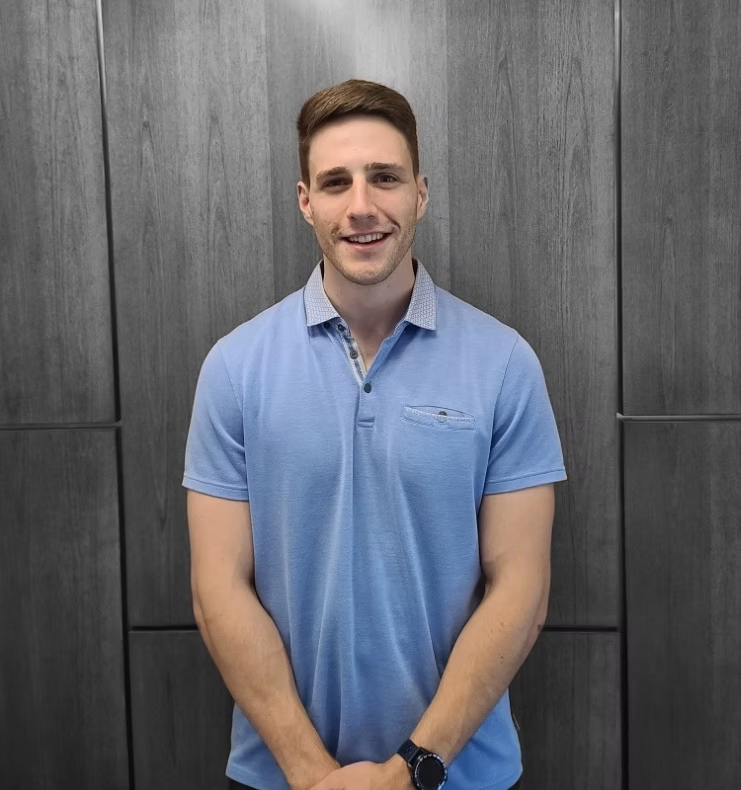
Cody Bock
Owner, Personal Trainer & Licensed Massage Therapist
M.S. Exercise Science · LMT (Licensed Massage Therapist)
Cody Bock is the founder of Full Circle Function & Fitness in Allison Park, PA. He combines a master's in exercise science with hands-on massage therapy expertise to help Pittsburgh's North Hills clients move better, train smarter, and recover faster.
Meet the teamRelated Reading

Walking vs Running for Weight Loss: Which Wins for People Over 40?
Running burns more per hour, but over 40 the winner is whatever you'll still be doing a year from now. A trainer explains walking vs running and the option most people miss.
Read article
How to Find a Good Personal Trainer: 5 Questions to Ask Before You Sign Up
Liking your trainer matters more than their degree. An Allison Park coach with an M.S. and CSCS ranks the 5 questions to ask before you hire a personal trainer.
Read article
Are 30 Minute Workouts Enough to Build Muscle? An Honest Answer
In theory, yes. In real life, usually not. An Allison Park trainer explains who the 30-minute workout research was actually done on, and how much time you really need.
Read article