Functional Fitness vs Bodybuilding: Which Should You Train For?
You don't need to train like a bodybuilder, but you do need to build muscle. An Allison Park trainer explains what to borrow from bodybuilding when you're training for life.
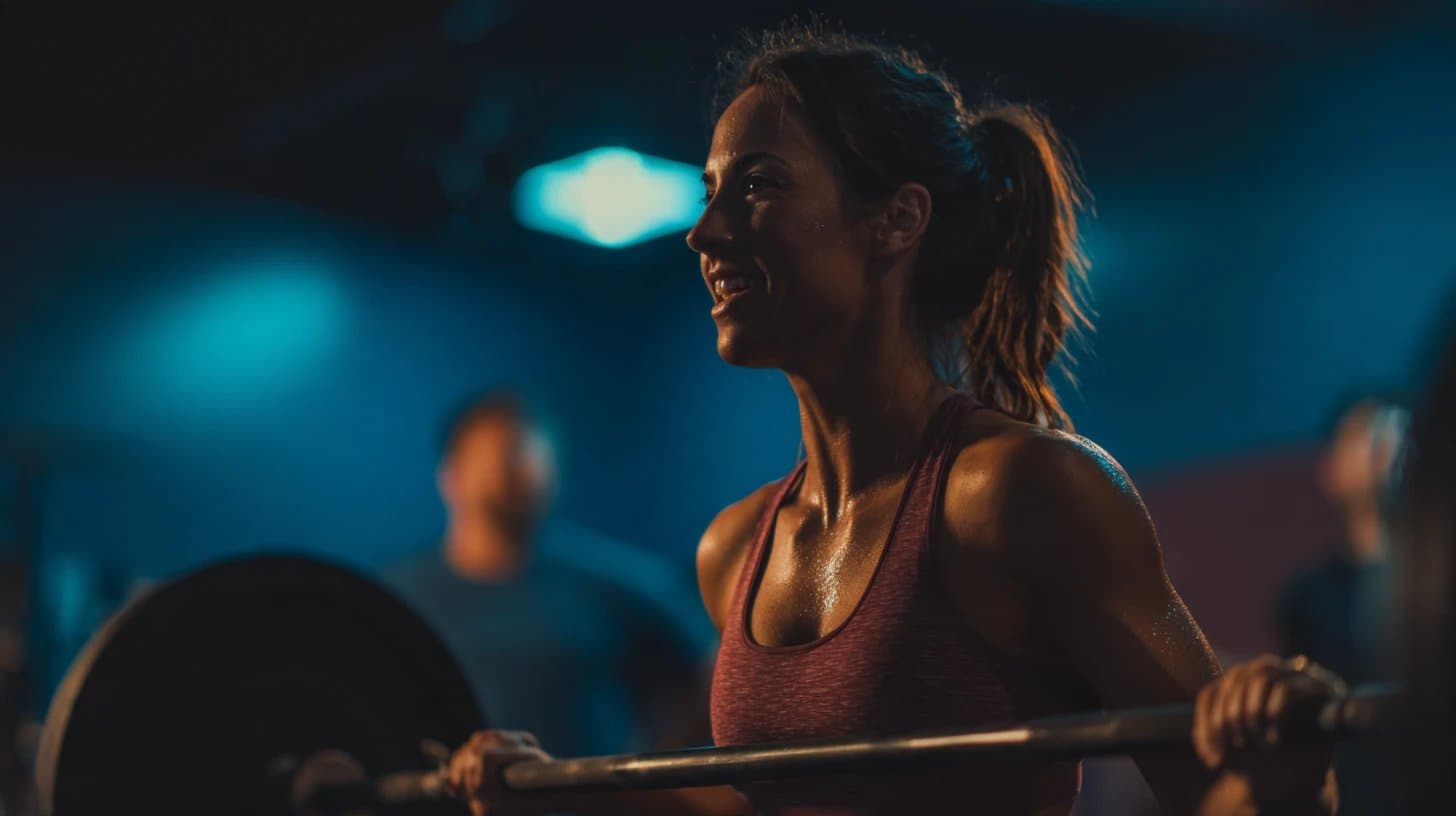
Each day, most of us live our lives prioritizing other people's needs and happiness while pushing our own well-being to the back burner. It's time to change things around. When you start prioritizing your own well-being, the well-being, happiness, and quality of life of those around you often improves as well.
Do You Want to Be a Bodybuilder?
No?
Then don't train or eat like one. It's really that simple.
But there's a bigger misunderstanding hiding behind this question, and it keeps a lot of people, especially women, out of the weight room entirely.
"I Don't Want to Get Bulky"
One of the most common negative self-negotiations I see women make with themselves is, "I don't know if strength training is for me. I don't want to get bulky."
That's like saying, "I'm worried about becoming a race car driver every time I get in my minivan."
You have to try to get bulky. Bodybuilders do it by training for hours a week, for years, and intentionally eating a ton of food to build copious amounts of muscle. It doesn't happen by accident on three sessions a week.
Here's the part people don't expect: you will build muscle, and that's a good thing. A 2020 meta-analysis in the Journal of Strength and Conditioning Research found women build muscle at about the same rate as men relative to where they start, and gain upper-body strength even faster. That muscle doesn't make you bulky. It makes you strong, and it protects you for the next 40 years.
I went deeper on this, and on why it matters so much after menopause, in strength training for women over 40.
Why We Still Need to Borrow From Bodybuilding
With that being said, there are things about training like a bodybuilder that we should take into account when training for our life and function.
Every decade after 30, you lose muscle. A review in Current Opinion in Clinical Nutrition and Metabolic Care puts it at roughly 3 to 8 percent per decade, and the decline speeds up after 60.
3–8%
of muscle mass lost per decade after age 30, with the rate of decline even higher after 60
Source: Volpi et al., Current Opinion in Clinical Nutrition and Metabolic Care, 2004
That's a major decline in your ability to live a full life. Especially if your retirement plan is to spend it as a skin sack of adipose tissue and fragile bones.
Your bones follow the same rule as your muscles: use them or lose them. In the LIFTMOR trial in the Journal of Bone and Mineral Research, postmenopausal women with low bone mass lifted heavy twice a week, for just 30 minutes, for eight months. Their spine bone density went up 2.9 percent. The group doing a low-intensity home program lost 1.2 percent. Every measure of physical function improved too.
+2.9% vs −1.2%
spine bone density after 8 months of heavy lifting twice a week for 30 minutes, vs a low-intensity program
Source: Watson et al., LIFTMOR trial, Journal of Bone and Mineral Research, 2018
So taking aspects of bodybuilding isn't a bad thing. We literally need to build muscle in our bodies. Here's what's worth borrowing:
- Progressive overload. Gradually lifting more, or doing more, over time. Your body only adapts when you give it a reason to.
- Enough hard sets per muscle. A 2021 review in Sports Medicine on time-efficient training puts the floor at about 4 hard sets per muscle group per week.
- Real effort. Working close to failure with good form. That's where the muscle-building stimulus is.
What You Don't Need to Borrow
What I don't think you need to do is spend 8 to 10 or more hours per week in the gym lifting weights.
The LIFTMOR women got real results in an hour a week. Most of our clients train two to three times a week for an hour, and that's plenty to build muscle, protect their bones, and feel great. I explained why I recommend full hours instead of 30-minute sessions in are 30 minute workouts enough to build muscle.
You also don't need the extreme diets, the bulking and cutting cycles, or a program built around isolating every muscle for the mirror.
Functional Fitness vs Bodybuilding at a Glance
| Bodybuilding | Functional fitness (training for life) | |
|---|---|---|
| Main goal | Maximum muscle size and stage appearance | Strength, pain-free movement, independence, feeling good |
| Time in the gym | Often 8–10+ hours a week | 2–3 focused hours a week |
| Diet | Deliberate bulking and cutting phases | Normal eating that supports your goals |
| Exercise focus | Isolating individual muscles | Movements you use in life: squat, hinge, push, pull, carry |
| Builds muscle? | Yes, as much as possible | Yes, enough to stay strong for decades |
| Borrows from the other? | Rarely | Yes: progressive overload, hard sets, real effort |
Train for YOUR Goal
The biggest thing is training for your goal.
Most of our clients are training for the goal of living and feeling good. They want to be strong so they can play with their kids and grandkids. Maybe they want to look better in the mirror, or stop being in pain. Those are great goals.
The training for those goals uses elements of bodybuilding. But we aren't trying to be bodybuilders.
If you want to see what that looks like when you're starting late, I laid out the plan in how to build muscle after 50.
Want help learning what training for life looks like? Give us a call. At our Allison Park studio, we build muscle with the parts of bodybuilding that matter, around the life you actually want to live.
The Bottom Line
Don't train like a bodybuilder unless you want to be one. You won't accidentally become one either.
But don't skip the muscle. You're losing 3 to 8 percent of it every decade after 30, and muscle and bone are what keep you strong, independent, and out of pain. Borrow what works from bodybuilding, leave the rest, and train for your life.
If you're in Allison Park, the North Hills, or anywhere around Pittsburgh and you want help learning what training for life looks like, give us a call.
Always remember: the more willing you are to make changes to prioritize your well-being, the better you will be at taking care of those around you. YOUR well-being is important, and it is time to start prioritizing it, FOR LIFE.
Frequently Asked Questions
What is the difference between functional fitness and bodybuilding?
Bodybuilding trains for size and appearance, often with 8 to 10 or more hours a week in the gym and a carefully controlled diet built around eating a lot to grow muscle. Functional fitness trains for your life: being strong enough to play with your kids or grandkids, carry groceries, stay out of pain, and stay independent as you age. Functional training still builds muscle, using some bodybuilding methods, but in far less time.
Should I train for functional fitness or bodybuilding?
Train for your goal. If you want to compete on a bodybuilding stage, train like a bodybuilder. If your goal is to feel good, move without pain, look better, and stay strong for decades, train for function, and borrow the parts of bodybuilding that build muscle, like progressive overload and enough hard sets per muscle each week.
Will lifting weights make me bulky?
Not by accident. Women build muscle at about the same rate as men relative to where they start, which is good news, because that muscle protects you as you age. But the size bodybuilders carry comes from years of high-volume training and deliberately eating a large surplus of food. Lifting a few times a week while eating normally will make you stronger and more toned, not bulky.
How much muscle do you lose with age?
Muscle mass decreases by approximately 3 to 8 percent per decade after age 30, and the rate of decline is even higher after 60. This loss, called sarcopenia, is a major contributor to weakness, falls, and disability in older adults. Strength training is the most effective way to slow or reverse it.
How much time do I need to spend lifting to build muscle?
Far less than a bodybuilder. A 2021 review in Sports Medicine recommends a minimum of about 4 hard sets per muscle group per week. In the LIFTMOR trial, postmenopausal women with low bone mass who lifted twice a week for 30 minutes improved spine bone density by 2.9 percent in 8 months, while a low-intensity group lost bone. Two to three focused sessions a week is enough for most people.
What can I borrow from bodybuilding if I train for function?
Three things: progressive overload, meaning gradually lifting more over time; enough hard sets per muscle group each week to give your muscles a reason to grow; and training close to failure with good form. Skip the 10-hour weeks, the extreme diets, and the isolation exercises that do not carry over to daily life.
Ready to train smarter?
Train for your life, not a stage. Give us a call and see what functional strength training looks like at Full Circle Function & Fitness in Allison Park.
About the author
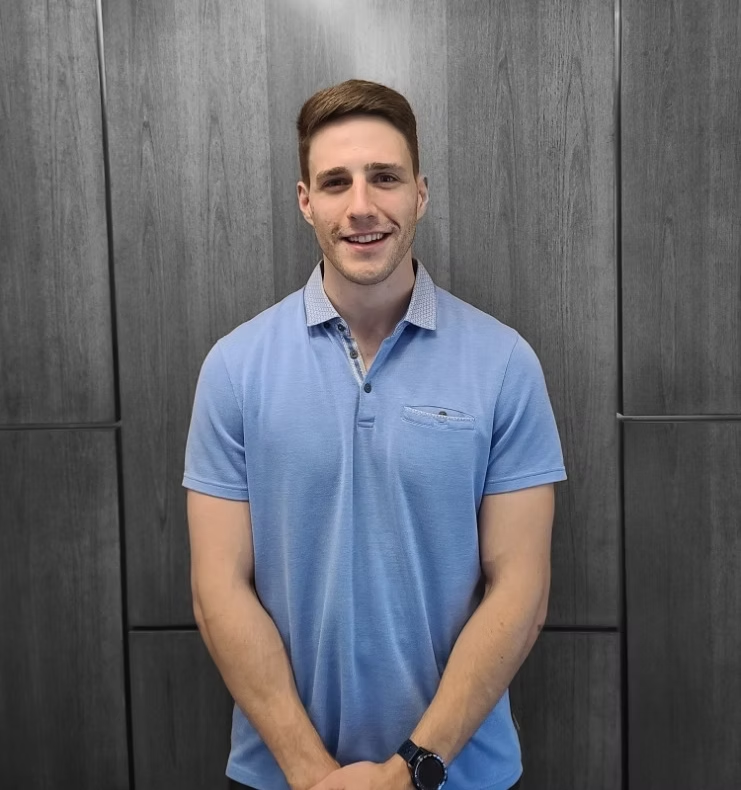
Cody Bock
Owner, Personal Trainer & Licensed Massage Therapist
M.S. Exercise Science · LMT (Licensed Massage Therapist)
Cody Bock is the founder of Full Circle Function & Fitness in Allison Park, PA. He combines a master's in exercise science with hands-on massage therapy expertise to help Pittsburgh's North Hills clients move better, train smarter, and recover faster.
Meet the teamRelated Reading

Walking vs Running for Weight Loss: Which Wins for People Over 40?
Running burns more per hour, but over 40 the winner is whatever you'll still be doing a year from now. A trainer explains walking vs running and the option most people miss.
Read article
How to Find a Good Personal Trainer: 5 Questions to Ask Before You Sign Up
Liking your trainer matters more than their degree. An Allison Park coach with an M.S. and CSCS ranks the 5 questions to ask before you hire a personal trainer.
Read article
Are 30 Minute Workouts Enough to Build Muscle? An Honest Answer
In theory, yes. In real life, usually not. An Allison Park trainer explains who the 30-minute workout research was actually done on, and how much time you really need.
Read article