Strength Training for Women Over 40: How to Prevent Muscle Loss and Stay Strong for Life
Women lose 3-8% of muscle every decade after 30. A personal trainer in Allison Park breaks down the lifting, protein, and creatine plan to prevent it.

Most of us spend our days prioritizing other people's needs and happiness while pushing our own well-being to the back burner. It's time to change that. When you start prioritizing your own well-being, the well-being, happiness, and quality of life of everyone around you tends to improve right along with you.
If you're a woman over 40, this one's specifically for you.
"Bingo Arms" Are Sarcopenia Setting In
3-8%
of muscle mass women lose every decade after 30
Source: Clinical research on sarcopenia
That's what "bingo arms" actually are — the visible edge of a much bigger problem called sarcopenia, the age-related loss of muscle mass. It starts quietly in your 30s and accelerates hard after menopause.
Sarcopenia doesn't travel alone. It brings osteopenia (bone loss) and, eventually, osteoporosis with it. Left unchecked, you literally wither away as you get older.
Here's what that actually looks like in day-to-day life:
- Difficulty climbing stairs
- Struggling to stand up from the toilet (no one wants to be stuck there)
- Not being able to get down on the floor to play with your kids or grandkids
- Chronic pain and stiffness
- Falls — and the broken bones that follow
- General weakness and fatigue
- And yes, the dreaded bingo arm
None of this has to happen. Not most of it, anyway.
The Good News: This Is Almost 100% Preventable
If you've read any of the other posts on this site, you already know where this is going.
Start lifting weights. Yesterday.
That's not hyperbole. Strength training is the single most reliable intervention we have for preventing the muscle loss, bone loss, and functional decline that most women assume is just "getting older."
"But I Don't Want to Get Bulky"
Let me push back on this one, gently but firmly.
Have you ever hopped into your minivan to take the kids to school and worried you might accidentally turn into a NASCAR driver? That's roughly the odds of getting "too bulky" from lifting weights as a woman over 40.
It's not going to happen. I've been trying to get bulky for almost 20 years and it still hasn't happened. Getting visibly bulky as a woman takes years of extremely targeted training, aggressive eating, and often supplementation most people don't use. It doesn't happen by accident from a few weekly gym sessions.
What actually happens when you strength train consistently:
- You get stronger
- You feel leaner (even if the scale barely moves)
- Your posture improves
- Your clothes fit better
- You can carry your own suitcase, groceries, and kids without help
- You sleep better
- Your mood improves
That's not "bulky." That's just what a functional, capable body looks and feels like.
The 4-Part Plan for Women Over 40
Here's exactly what to do. It's simple. It's not easy — but it's simple.
1. Lift Weights 3 Times Per Week
Focus on strength and hypertrophy — the training that actually builds and maintains muscle. That means compound movements: squats, deadlifts, rows, presses, lunges, carries.
Three sessions a week, 45 to 60 minutes each, is enough to see real changes within a month. Get someone to coach you through the movements in the first few weeks — form matters, and Google won't catch what a trainer will.
2. Eat 80-100 Grams of Protein Per Day
At a minimum.
Most women I talk to are eating far less than this and don't realize it. Same target we covered in the GLP-1 post — because the underlying muscle math doesn't care whether you're on a medication or not. Muscle needs protein to survive.
Good whole-food sources: chicken, fish, beef, pork, eggs, Greek yogurt, cottage cheese, most nuts and seeds. A protein shake once a day is a totally reasonable tool if you struggle to get there from meals alone.
3. Start Taking Creatine
Creatine is the most studied supplement in the world. It's safe. It works. And the research on women over 40 is especially promising — not just for strength and muscle, but for cognitive function too.
3 to 5 grams per day of creatine monohydrate. That's it. It doesn't need to be fancy. Take it any time of day. If you have kidney issues, check with your doctor first.
4. Keep Moving — Every Day
If you stop moving, you lose the ability to move. Full stop.
Ever notice the very slow, hunched-over older woman with a walker inching across the crosswalk? The vast majority of the time, that's not bad luck. That's a body that lost muscle for 30 years without anyone pushing back on it. Yes, there are exceptions — car accidents, major trauma, illness. But most of the time, it's just decades of quiet muscle loss doing what muscle loss does.
Walk daily. Get on the floor and back up. Reach overhead. Carry heavy things. Move in every direction your body was built to move in — regularly enough that your body remembers how.
Our Allison Park studio has coached a lot of women over 40 who arrived scared of "getting bulky" and left stronger, leaner, and moving better than they had in a decade. Your first personal training session is complimentary — designed for women who want to feel stronger, not bulky. (Unless you drive a minivan. You might get jacked.)
The Challenge
This one is intentionally easy.
Step 1: Track Your Protein for 3-5 Days
Weigh your protein raw and write down your daily total. Don't change anything about how you eat yet — just track.
The point isn't to fix anything this week. The point is to see the actual gap between where you are and where you need to be. Most women are surprised (and not in a good way).
MyFitnessPal is the easiest app to log with. A notebook works too. Email or call the studio if you want a walkthrough.
This is the same challenge from the GLP-1 post because the protein gap is that important — especially for this demographic.
Step 2: Test Your Functional Strength
Not with weights — with your actual life.
Walk around your house and find heavy things. Try to pick them up. (Don't hurt yourself — use good form and stop if something feels off.) Some tests:
- Can you pack a suitcase and lift it into an overhead bin?
- Can you carry a full laundry basket up a flight of stairs without a break?
- Can you get down on the floor and back up without using your hands?
- Can you carry two full grocery bags from the car to the kitchen in one trip?
If the answer is no or "barely" — that's the point of this exercise. You should be able to function in your own home and in the world without needing help from your husband, kids, or family. It's basic daily living.
And if you can't do it easily now, what happens in 10 years? Or 20?
You either build the strength back now, or you slowly lose more of it. There isn't really a third option.
The Bottom Line
The more willing you are to make changes that prioritize your well-being, the better you'll be at taking care of everyone around you. Your well-being is important. Treat it that way — for life.
If you're a woman over 40 in Allison Park, the North Hills, or anywhere in the Pittsburgh area and you want help building a strength routine that actually holds up as you age, that's exactly what we do at Full Circle. Happy to help.
Frequently Asked Questions
Will lifting weights make me bulky as a woman?
No. Getting "bulky" as a woman takes years of extremely targeted training, aggressive eating, and often supplementation most people don't use. Regular strength training makes women stronger, leaner, and more functional — not bulky. It won't happen by accident.
How much muscle do women lose after 40?
Women lose roughly 3 to 8 percent of muscle mass every decade starting in their 30s, and the rate accelerates after menopause. That muscle loss (called sarcopenia) drives the weakness, falls, broken bones, and fragility most people associate with aging — but it's largely preventable.
How much protein do women over 40 need?
At minimum, 80 to 100 grams per day — more if you're active or trying to build muscle. Most women eat far less than this and don't realize it. On days you strength train, protein becomes even more important for muscle repair and preservation.
Is creatine safe for women over 40?
Yes. Creatine is one of the most studied supplements in the world and is safe for healthy adults. For women over 40, it helps with strength, muscle preservation, and — more recently — cognitive function. 3 to 5 grams per day of creatine monohydrate is a solid starting point. Talk to your doctor if you have kidney issues.
How often should women over 40 lift weights?
Three times per week is the minimum for meaningful strength and muscle gains. Focus on compound movements — squats, deadlifts, rows, presses — done under coaching so form is right. A 45 to 60 minute session, three times per week, is enough to change how you feel within a month.
What is sarcopenia?
Sarcopenia is the age-related loss of muscle mass and strength. It starts quietly in your 30s and accelerates after menopause. Left unaddressed, it leads to weakness, poor balance, falls, and loss of independence. Strength training and adequate protein are the two proven interventions.
Ready to train smarter?
Ready to feel stronger, not smaller? Book a complimentary personal training session at Full Circle Function & Fitness in Allison Park — we build programs for women over 40 who want to be capable, confident, and independent for life.
About the author
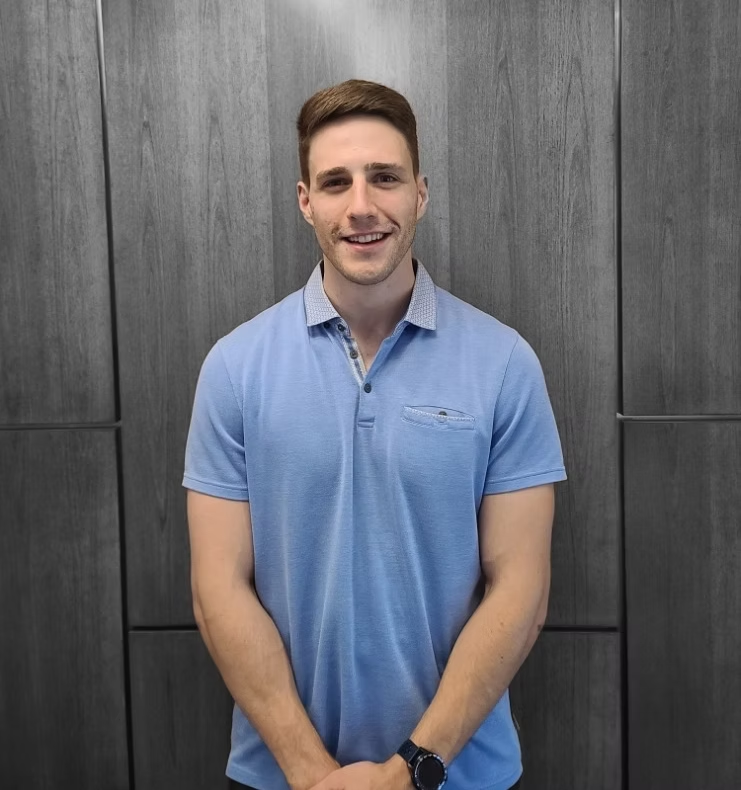
Cody Bock
Owner, Personal Trainer & Licensed Massage Therapist
M.S. Exercise Science · LMT (Licensed Massage Therapist)
Cody Bock is the founder of Full Circle Function & Fitness in Allison Park, PA. He combines a master's in exercise science with hands-on massage therapy expertise to help Pittsburgh's North Hills clients move better, train smarter, and recover faster.
Meet the teamRelated Reading
How to Find a Good Personal Trainer: 5 Questions to Ask Before You Sign Up
Liking your trainer matters more than their degree. An Allison Park coach with an M.S. and CSCS ranks the 5 questions to ask before you hire a personal trainer.
Read article
Are 30 Minute Workouts Enough to Build Muscle? An Honest Answer
In theory, yes. In real life, usually not. An Allison Park trainer explains who the 30-minute workout research was actually done on, and how much time you really need.
Read article
How to Build Muscle After 50: A Step-by-Step Guide
Yes, you can build muscle after 50. An Allison Park trainer lays out the 4 steps that work: sleep, lifting 3x a week to near failure, tracking protein, and consistency.
Read article