Lower Back Pain From Sitting All Day? Your Desk Job Might Be Contributing
Desk jobs can feed lower back pain by keeping your hips stiff and your core/glutes underused. An Allison Park trainer shares a 10-minute fix.
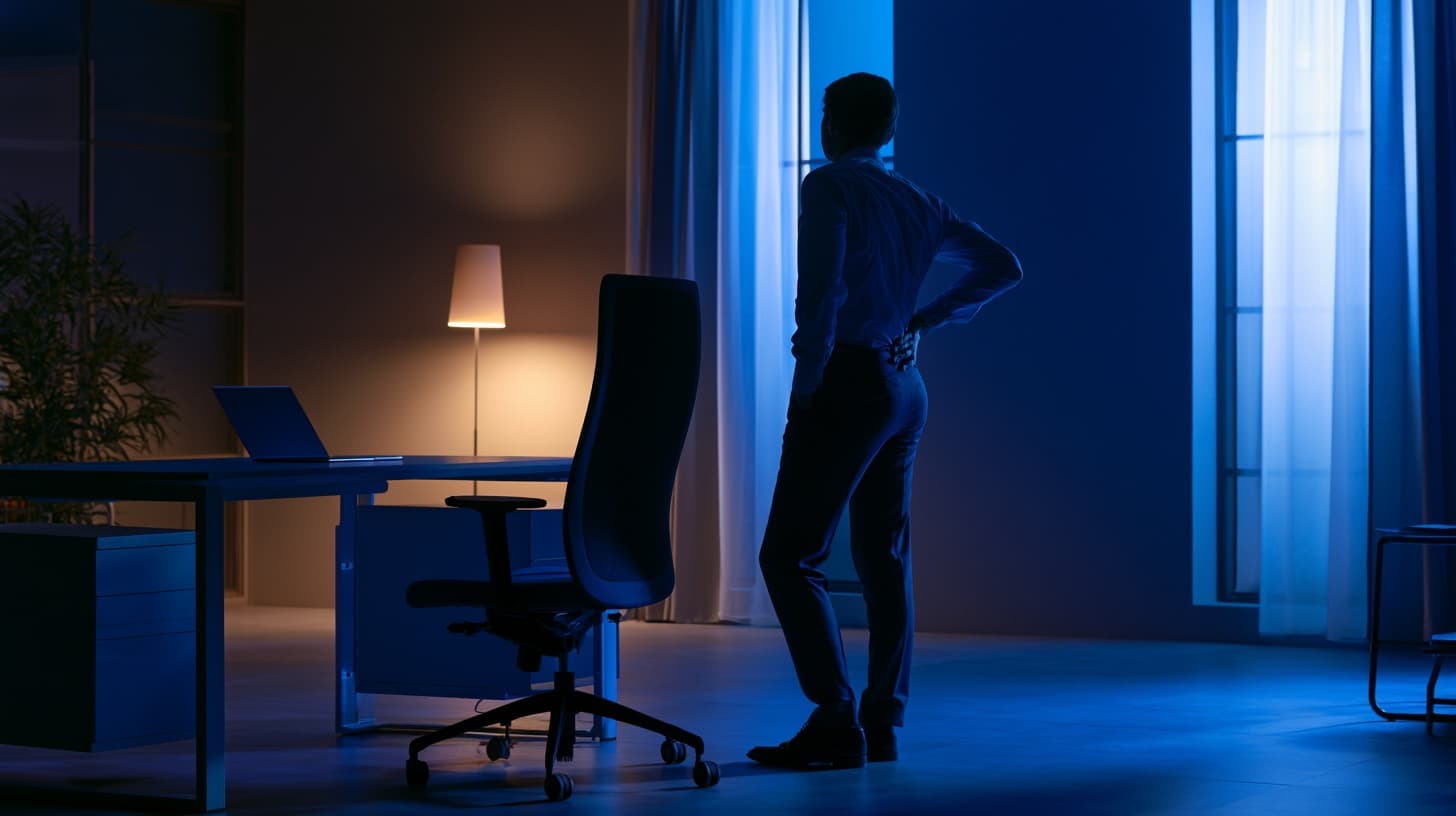
Most of us spend our days prioritizing other people's needs and happiness while pushing our own well-being to the back burner. It is time to change that. When you start prioritizing your own well-being, the well-being, happiness, and quality of life of everyone around you tends to improve right along with you.
And if you sit at a desk all day with lower back pain, this one is for you.
Is My Desk Job Causing My Lower Back Pain?
Short answer: it might be contributing. A lot.
I am not diagnosing you through a blog post. If your back pain is sharp, shooting down your leg, getting worse, or paired with numbness or weakness, get evaluated. But if you are a desk worker who feels stiff and achy in the low back after hours of sitting, then yes, your job is probably part of the problem.
Not because sitting is evil. Sitting is fine.
Sitting still for hours, every day, with no strength work and barely any movement? That is where things get spicy.
2+
days per week adults should do muscle-strengthening activity
Source: CDC Physical Activity Guidelines
The CDC recommends adults get at least 2 days of muscle-strengthening activity every week. Most desk workers I meet are not doing that. So the body gets really good at the thing it practices most: sitting.
What Sitting Does to Your Hips and Low Back
When you sit on your butt at work all day, the muscles on the front of your hips - your hip flexors and the upper portion of your quads - stay in a shortened position for hours.
Those muscles get tight. Then they can pull your pelvis forward.
When your pelvis dumps forward, the lower part of your back muscles - especially the lower portion of the erector spinae - can end up shortened and cranky too. That is why your low back feels tight even though the problem is not always only in your low back.
You have probably noticed this already.
You stand up after a long stretch at your desk, walk around for a minute or two, and feel moderately better. Not perfect. Not magically healed. But better.
Hopefully that sentence sunk in.
Movement is medicine.
Not because it is cute on a coffee mug. Because your body literally feels better when you stop freezing it in one position.
The Real Problem: Your Low Back Is Doing Too Much
A lot of people think the answer to back pain is to stretch the back harder.
Sometimes that feels good for 30 seconds. Then the pain comes back. Then you stretch again. Then it comes back again. Fun little loop.
The better question is this:
Why is your low back working so hard in the first place?
For many desk workers, the answer is that the big muscles around the pelvis are not doing enough.
Your glutes should help control your hips and pelvis. Your abs should help keep your pelvis and rib cage stacked. Your legs should know how to squat, hinge, and pick things up from the floor without turning every daily task into a low-back event.
But when those muscles are weak, sleepy, or poorly coordinated, the little muscles and the low back start picking up the slack.
They are not thrilled about it.
The Easy Temporary Solution: Get Up and Walk
Everyone has 5 minutes.
I know. Your schedule is busy. Your inbox is a disaster. You are in meetings. You have kids. You have a job. You have a thousand reasons to stay glued to the chair.
Still: everyone has 5 minutes.
Get up and move your body a few times during the day. Walk around the office. Walk outside. Go up and down a flight of stairs. Stand during a phone call. Do a few gentle hip circles. It does not need to be a full workout.
It needs to be enough to remind your body that you are not furniture.
This is the temporary relief category. Movement, massage therapy, and some basic body work can all help lower the discomfort so you do not hate the entire day. Massage can be especially helpful when your hips and low back feel guarded and locked up.
But temporary relief is not the whole solution.
It is the opening move.
NICE guidelines for low back pain recommend staying active and using exercise as part of care. They also recommend massage or soft tissue work only as part of a bigger treatment package that includes exercise. That tracks with what we see every week at Full Circle.
Hands-on work helps you feel better. Strength helps it stick.
The 10-Minute Desk Job Back Pain Routine
If you want a short-term investment that can actually start changing the pattern, do these three exercises in this order.
This should take just under 10 minutes. Add the walk after if you can.
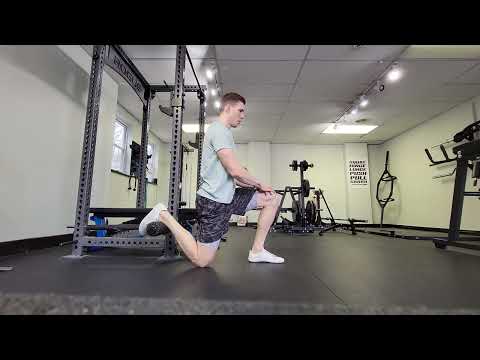
1. Half-Kneeling Quad and Hip Flexor Stretch
Do 3 sets of 30 seconds per side.
Set up in a half-kneeling position with one knee down and the other foot planted in front. The side with the knee down is the side you are stretching.
Here is the important part: squeeze the glute of the down-knee side the entire time.
That glute squeeze matters. When you activate the back side of the hip, the front side of the hip can relax a little. Trainer-speak for that is reciprocal inhibition. Normal-person translation: squeeze your butt so the front of your hip stops fighting you.
You should feel the stretch through the front of the hip and maybe the upper quad. You should not feel your low back pinching.
If you do, tuck your pelvis slightly, squeeze the glute harder, and make the position smaller.
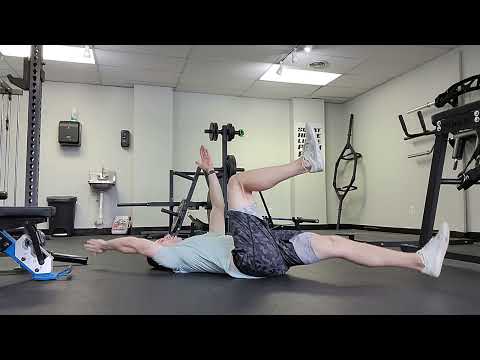
2. Dead Bugs
Do 3 sets of 10 reps per side.
Lie on your back with your arms up and knees bent. Your job is to move one arm and the opposite leg while keeping your low back flat on the ground.
That low-back position is the whole point.
If your back arches, the exercise is too hard for where you are right now. No ego. Modify it.
Try keeping your arms still. Or bend your knees more so the lever is shorter. Physics stuff. The farther your leg reaches, the harder your abs have to work to keep your pelvis still.
You should feel your abs working. You should not feel your low back taking over.
This is not a circus trick. This is you teaching your core to control your pelvis so your back can calm down.
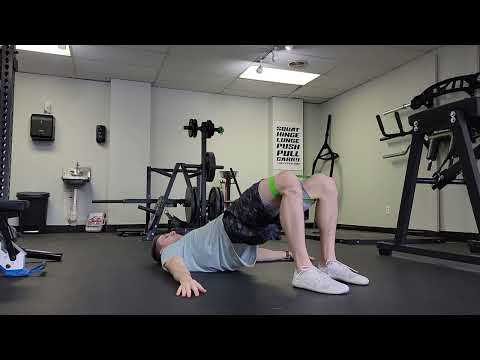
3. Glute Bridges
Do 3 sets of 12 reps, squeezing your glutes and holding the top position for 3 seconds each rep.
Lie on your back, knees bent, feet on the floor. Drive through your feet, squeeze your glutes, and lift your hips.
At the top, hold and squeeze.
This gives the front of the hips a nice loaded stretch while teaching the glutes to do their job. Back to that reciprocal inhibition thing again, except now you are loading it with your body weight.
If you feel your hamstrings, move your feet a little closer to your butt.
If you feel your quads, move your feet a little farther away.
If you feel your low back, brace your abs and focus on moving from the glutes. If you cannot get all the way up without feeling it in your back, only go as high as you can control. Build from there.
4. Then Go for a Walk
Do not skip this because it seems too simple.
Walking is one of the easiest ways to get the hips moving, pump blood through the area, and teach your body that movement is safe.
These three exercises plus a walk can make a noticeable difference in 7 to 10 days for a lot of people.
Not because they are magic.
Because you are finally giving the tight stuff a break and the weak stuff a job.
If your hips and low back feel locked up, massage therapy at our Allison Park studio can help calm things down so movement feels easier. Pair it with the exercise routine above, and you have a much better shot at making the relief last longer than a day.
The Long-Term Fix: Relearn the Squat and Deadlift
The long-term solution is not avoiding everything that makes you nervous.
It is building strength in the movements your life requires.
That means squats and deadlifts.
"But my doctor told me not to squat or deadlift. It is bad for my back."
Maybe they are right for where you are today. If your movement is rough, your strength is low, and your back hurts every time you try, then sure, loading a bad pattern is not a great plan.
But the answer is not "never squat again."
How do you plan on getting on and off the toilet?
That is a squat.
How do you plan on picking something up from the floor?
That is a deadlift.
These are not gym bro movements. They are foundational human movements. A 10-month-old starts figuring out squats and hinges before they are even walking well. You are not learning something foreign. You are relearning something your body was built to do.
The issue is progression.
You may need to start with a box squat. Or a kettlebell deadlift from blocks. Or a hip hinge drill with no weight at all. That is fine. Start where you are and build.
This is the same reason we talk so much about strength training and lifting weights consistently. Strength is not just about looking different. It is about being able to live in your body without every normal task feeling risky.
What to Do This Week
Here is the challenge.
For the next 7 days:
- Get up from your desk for 5 minutes at least 3 times per workday.
- Do the half-kneeling hip flexor stretch, dead bugs, and glute bridges once per day.
- Walk after the routine, even if it is only around the block.
- Pay attention to what changes: morning stiffness, end-of-day pain, how you feel after sitting, and how quickly your back calms down once you move.
Do not make this complicated. Complicated is where consistency goes to die.
If it helps, put the routine right after work. You close the laptop, get on the floor, do the work, then walk. Done.
The Bottom Line
Your desk job may be contributing to your lower back pain, but the chair is not the whole villain.
The bigger problem is the lack of movement, the stiff hips, the underused glutes and abs, and the missing strength in the movements your body still needs every single day.
Movement is the temporary medicine. Strength is the long-term investment.
If you are in Allison Park, the North Hills, or the Pittsburgh area and your low back keeps barking every time you sit, stand, squat, or pick something up, come see us. We can help you figure out what is actually going on and show you how to move without making your back angry.
Happy to help.
Frequently Asked Questions
Can sitting all day cause lower back pain?
Sitting all day can absolutely contribute to lower back pain, especially when it keeps your hips in a shortened position and your glutes and abs underused. It is not always the only cause, but for desk workers it is one of the most common patterns we see.
What muscles get tight from sitting at a desk?
The hip flexors and the upper part of the quads tend to get stiff because they stay shortened while you sit. That can pull the pelvis forward and make the lower back muscles feel tight or overworked.
What exercises help lower back pain from sitting?
A simple starting routine is a half-kneeling hip flexor/quad stretch, dead bugs, glute bridges, and then a walk. The stretch helps open the front of the hip, dead bugs teach the abs to control the pelvis, and glute bridges wake up the muscles that should support your hips.
How often should I get up from my desk for lower back pain?
Start with 5 minutes of movement a few times per day. Walk, stand, stretch, or change positions. You do not need a perfect routine at work. You need to stop staying locked in the same position for hours.
Are squats and deadlifts bad for lower back pain?
Squats and deadlifts are not automatically bad for your back. They are foundational human movements. The issue is loading them before you have the strength, control, and technique to do them well. If they hurt, get coached and relearn the movement instead of avoiding it forever.
Can massage help lower back pain from sitting?
Massage can help reduce short-term discomfort and make it easier to move, but it works best when paired with exercise and strength training. Hands-on work can calm things down; movement and strength are what make the change stick.
Ready to train smarter?
Tired of guessing your way through low back pain? Book a complimentary session at Full Circle Function & Fitness in Allison Park. We will help you rebuild the squat, hinge, core control, and strength your daily life actually requires.
About the author
Cody Bock
Owner, Personal Trainer & Licensed Massage Therapist
M.S. Exercise Science · LMT (Licensed Massage Therapist)
Cody Bock is the founder of Full Circle Function & Fitness in Allison Park, PA. He combines a master's in exercise science with hands-on massage therapy expertise to help Pittsburgh's North Hills clients move better, train smarter, and recover faster.
Meet the teamRelated Reading

Pre-Workout Stretching: What Actually Helps vs What Wastes Time
Long static stretches can sap your strength before you lift. An Allison Park trainer shares the 4-part, 15-minute warm-up that actually works, with a sample squat day.
Read article
How to Fix Tight Hips From Sitting: 4 Drills That Work in Under 10 Minutes
Tight hips from sitting? The chair is half the problem. An Allison Park trainer explains why weak glutes make tight hip flexors, plus a 10-minute video routine.
Read article